
On 'Ruining Downtown'
Safety, addictions and housing solutions

How is it that my heart can soar and be broken on the same street in downtown Edmonton? Last week I had a free moment and decided to get a coffee and sit out for a while and write on Credo’s patio on Rice Howard Way — one of my favourite places in the city.
As past mayor, plunking down on a patio is always a risk since I tend to get interrupted a lot. It did make for poor output, but it turned into this piece, and it turns out what I needed more than words on the page was to catch up with some of the people I used to work for, and hear their unsolicited takes on what’s been happening in the city, particularly in our downtown.
I chatted with easily a dozen people, some of whom I’d worked with before, most of whom I was meeting for the first time. Such is it when a million citizens have you at a disadvantage.
You might be wondering if any of the interactions were angry or aggressive. After all, such is the tone of politics and even culture itself these days. Blame is simple and satisfying. Rage gets likes. And disrespect for leaders is opportunistically and shamelessly cultivated by the people who want their jobs — which paradoxically only makes it harder to fulfill those very roles should they succeed, but I digress.
Yet Edmontonians, in real life, remain an extremely respectful and constructive bunch in my experience. People lamented their fears, shared their frustrations, but also asked questions like what can we do, and why is it like this? So the good news, from my small unscientific sample last Friday, is that real people are concerned but still curious, and still able to access some compassion — and that’s the sweet spot for consensus and solutions, rather than a digital shouting match, or sustained grievance narrative.
As an aside, I’m surprised but very pleased to report that I have had exactly one negative in-person interaction in the four years since I retired from City Hall. Sure, I get the odd furrowed brow at the grocery store — from folks whom I can only assume received a lot of speeding tickets in the mail. But I’ve only had one person actually say anything harsh to me in the four years since I retired. Ironically, it was also on beautiful Rice Howard Way, emerging from a nice catchup lunch with a City Councillor. We got one of those looks, like at the grocery store, as we walked past a man travelling the opposite direction, who blurted: “Great job on downtown.”
I turned around to say, “Thank you?”
To which he replied, “I was being sarcastic. You ruined downtown.”
I don’t remember exactly what I said next, but it was probably a little defensive, like “well, at least we tried.” Honestly, it’s tough having the blame for something as complex and also totalizing as “ruining downtown” laid at your feet. But that’s also part of being an elected official, particularly a Mayor or First Minister.
At the risk of sounding more defensive, the Councils, civil servants, business associations, agencies, investors and building and business owners I knew mostly worked pretty hard to bring jobs and students downtown, improve transit, make the most of the new arena district, stimulate residential construction to bring more people downtown 24/7, support culture, promote our culinary scene, you name it. Could we have done more, or different? Of course. Is the city still hard at it? I truly believe so. But ruins? Forgive me, but I don’t see ruins.
Though one could be forgiven for thinking downtown must be filled with twitchy-eyed machete-wielding people, listening to the way so many Edmontonians with influence talk about our downtown. The most generous take is that these folks are echoing the frustrations of others, and genuinely feel concerned and afraid themselves. But ask yourself this: who is served by narratives that spread fear and even dehumanize people who are struggling, narratives that play on citizens’ deepest fears and desire for safety? And where else are we seeing those fear-based leadership tactics being employed, and what are the consequences of going down that road? I don’t for a minute question whether people feel unsafe at times, and that is heartbreaking all around, but I am watching this narrative get refined to higher and higher strength in this election cycle and it breaks my heart.
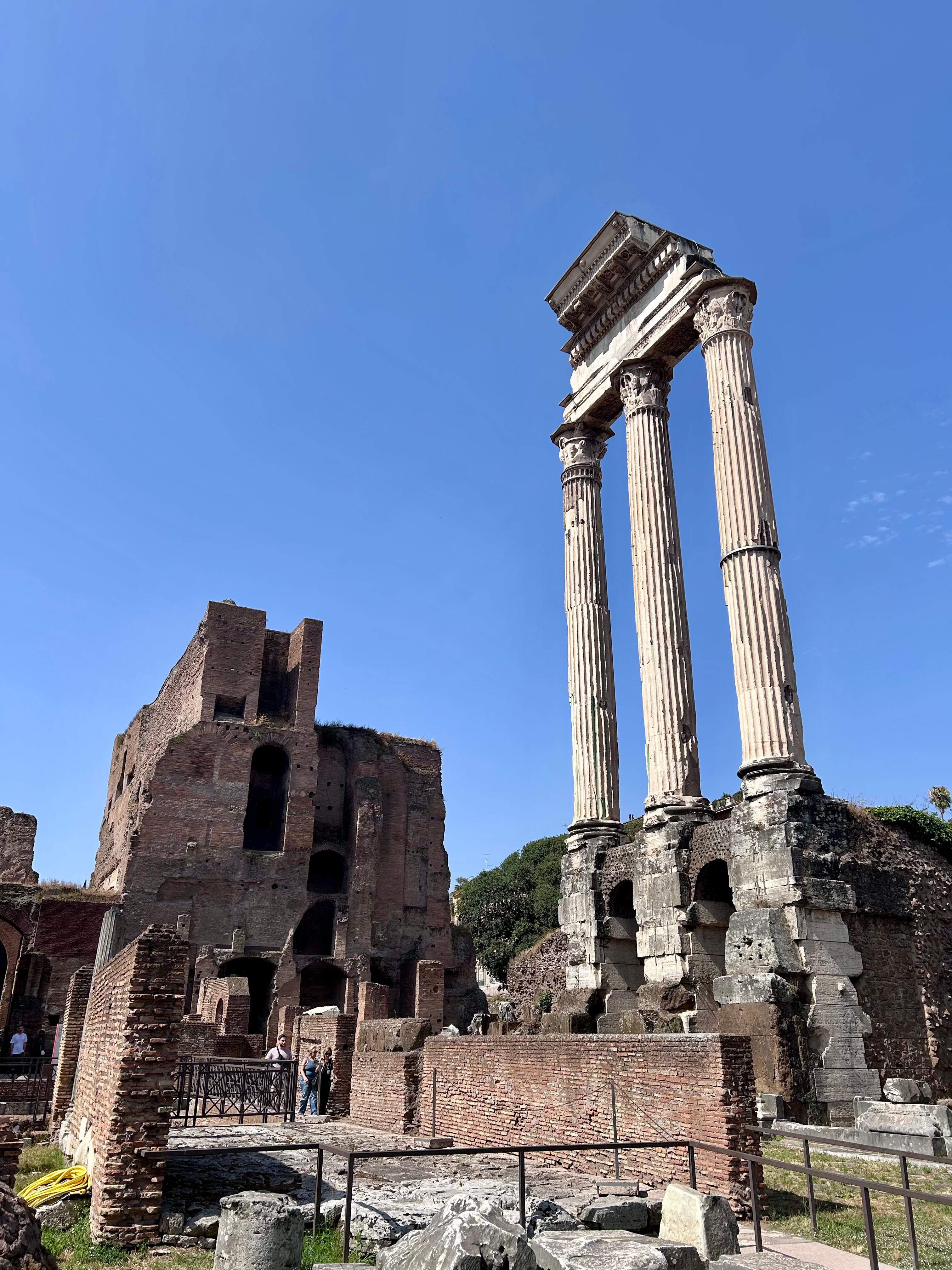
I wasn’t expecting to address these questions exactly when I went on the Ryan Jesperson Show over the summer to talk about a downtown revitalization and community investment project I helped co-found. (Homestead Investment Co-op, which I profiled in a previous post — there’s still time to invest, by the way, find the most up to date info here). But I went off a bit on a question about the City’s track record on downtown:
“As Edmontonians, we’re the first to give ourselves a hard time and internalize the things that don’t feel are going well in our downtown… I spend a lot of time in Canada’s other big cities, and they are all struggling with the same things. And so this narrative that some folks are grinding that ‘Edmonton did this to itself’ – I am so sick and tired of that. And I was frustrated by that when I was Mayor, but I’ve only seen it get worse.” (You can watch the full clip here.)
I got a lot of support for that perspective, and some heat of course. Though when I listen carefully to the narratives and complaints I have heard about our downtown, I think what people generally mean is either construction is very frustrating, and/or that they don’t feel safe on the street. I can empathize with both, but as I said these are problems facing all of Canada’s major cities. I honestly think people tend to perceive it as the worst in their town because they have to live it every day. But I’ve been in eight other provinces this year, and I can report it’s hard everywhere. Welcome to cities. If you want to play on easy mode, run for provincial politics where you have multiple options: blame Ottawa for anything that’s not going well, or punch down on municipalities, universities, health authorities or school boards to spin up your base.
Could construction projects be handled differently? Inevitably. But beware false promises of magically coordinating it differently during a short construction season, around increasingly unpredictable weather, and because aging infrastructure sometimes breaks unexpectedly. Those are just facts that we should all be honest about. And beware, even more critically, suggestions that we should pull back on repair work or improving transportation infrastructure in a city with our growth pressures. Remember, Edmonton kicked the can in the ‘90s, and it wound up costing a lot more to catch up since then.
And yes, we failed to end homelessness in Edmonton. That’s one of the greatest hits in the comments section, usually something along the lines of ‘Hey, Iverson - how’s year 15 of that 10-year plan to End Homelessness going?’ Well, it was going pretty well, for a time. Back when the City first made that commitment, we did so alongside Calgary, Red Deer, Lethbridge, Grande Prairie, Fort McMurray and Medicine Hat. Famously, Medicine Hat made enormous strides; so much so, people would routinely send me letters, links and DMs about it, and saying Edmonton should be doing the same thing. In fact, the ‘Seven Cities’ were literally working from the same playbook, though the scale of the issue in Edmonton and Calgary are different since the whole province’s challenges and hardest cases often tend to concentrate into the two biggest centres.
Together, the Seven Cities had the courage to make these bold commitments thanks to Premier Ed Stelmach — one of the most compassionate, humble and visionary leaders I’ve ever worked with — who committed the Province of Alberta, and its considerable resources, in alliance with cities, agencies, faith groups, and more to ending homelessness in our province by 2019.
Just imagine if we had gone into the Pandemic with no chronically unhoused people in Alberta? We wouldn’t have had large encampments, and wouldn’t have needed to convert the conference centre into an emergency shelter. We wouldn’t be debating whether more housing or more policing is needed, or whether it’s a health issue or a personal moral failure on the part of the unhoused person. Instead, the most vulnerable people in our community wouldn’t be political footballs anymore.
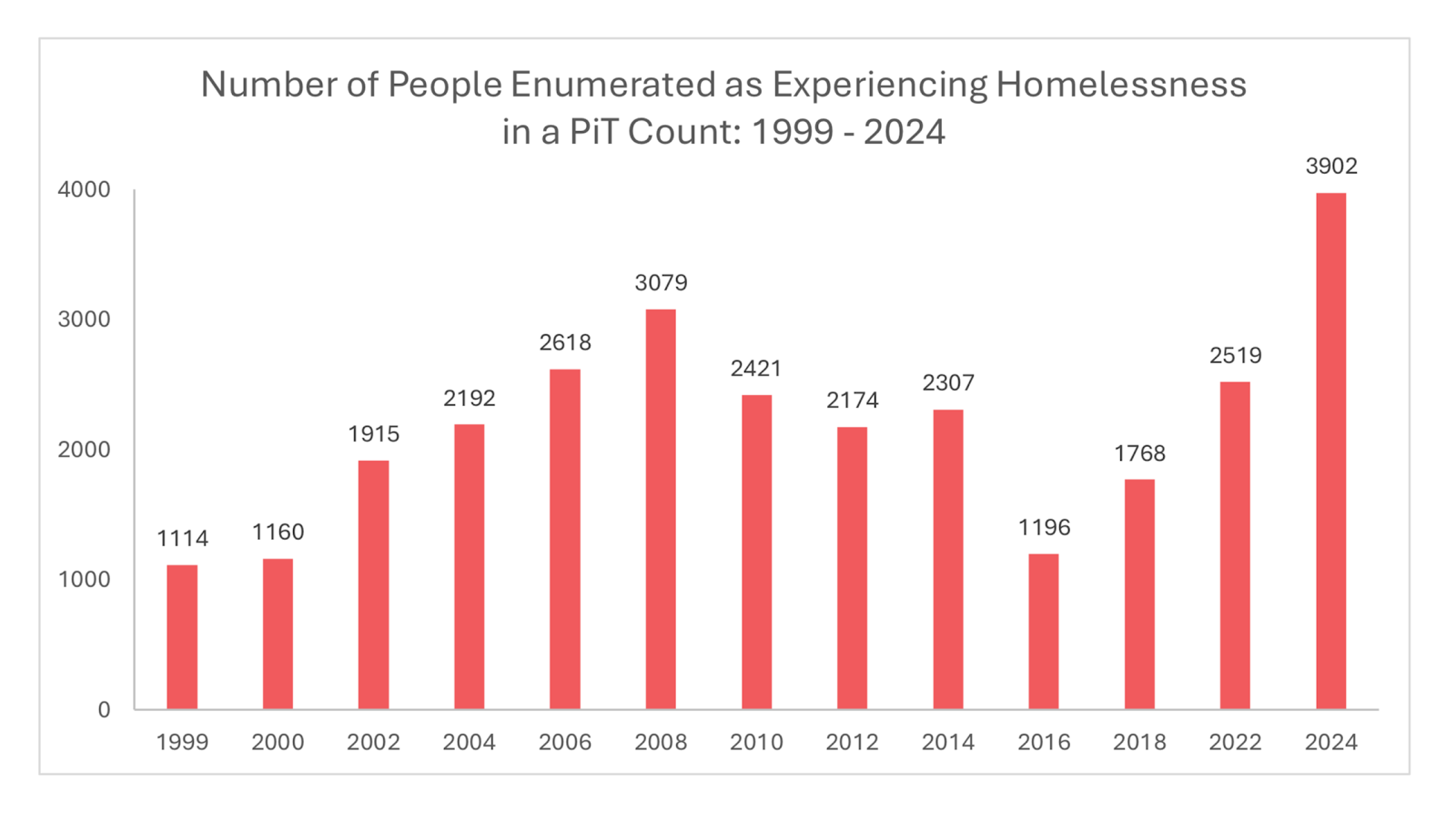
As you can see from the data above, Edmonton made significant strides in the first several years when the Province and cities were aligned, but Provincial funding and focus wandered elsewhere amidst a revolving door of premiers (I dealt with five premiers in eight years) and Alberta drifted from one of the leading jurisdictions on the continent to wherever we are today. Though it’s true, as the government of Alberta points out, we do have healthier housing supply and relatively affordable housing for most middle-income folks. This is largely attributable to municipal leadership as noted here (full disclosure, I was involved in that project). However, what’s often lost in Alberta’s strong overall housing statistics is that this is a very hard place to be poor, to be on AISH, or even to be between jobs for long, since housing at the affordable end of the spectrum is very scarce here. There are more families on waiting lists for subsidized housing than there are subsidized housing units here. To me, the links between rising housing precarity and rising homelessness are obvious.
Housing First is the underlying philosophy of most plans to reduce homelessness from Finland (an undisputed world leader) to Houston, which people often suggest Canadian cities should be emulating. In fact, on a per capita-basis, Edmonton’s success in housing folks has outpaced Houston’s, which is indeed the reference standard in the US.
Unfortunately, housing first has lost its cross-partisan consensus, with obvious fiscal, health, safety and social win-win-win articulated by conservatives and progressives. True, there is plenty of fodder for critics of how it has been poorly deployed in some jurisdictions, but the main issue in a lot of these cases is insufficient embedded supports for people with complex addictions and mental health conditions. But when it’s done right, it’s transformatively effective.
In Edmonton, at Ambrose Place, we have an indigenous-led example of how meeting people where they’re at, and working with them to heal in culturally-resonant ways works, while also reducing visits to the ER and interactions with police. Similar scalable models are found around the country, like Dunn House in Toronto, led by superstar Dr. Andrew Boozary at the University Hospital Network to divert unhoused frequent ER visitors into housing, which is more cost effective for the hospital than a revolving door. Closer to home, our own superstar Dr. Louis Francescutti has worked to develop ‘Bridge Healing’ housing using the same logic. Which is to say, there is a better way. We just need a lot more housing, with the right supports.
Recovery-based policy is not fundamentally at odds with this, addictions treatment availability is key, and I give credit to the former premier Jason Kenney’s government for massively expanding treatment programs in Alberta. However, housing first vs. recovery is a false dichotomy. We need both, administered compassionately, and respecting the dignity of folks who thrive more if they are treated with respect, rather than judgment.
I suppose the alternative is rounding people up and shipping them somewhere society doesn’t have to think about them. But as Dr. Boozary says, using Ontario numbers: it costs $30K a month to keep someone in hospital; $12K to imprison them; $6K in a shelter; or $4K a month for supportive housing. So there is a fix for the social disorder, the suffering, the crowded hospitals, the predation, and that felt-sense of unease in North American big city downtowns. It’s housing first, with embedded addictions and mental health support for our most marginalized to heal. I still believe, to quote an indigenous elder who once addressed City Council, that “Housing is the best medicine.” That’s why housing remains such a focus in my work since leaving City Hall.
Later the same afternoon, a lovely fellow named Roland stopped me outside the Milner library to inquire about drug use and disorder on the streets. He asked me questions with the kind of thoughtful mix of concern, compassion and curiosity that I came to love in Edmontonians. We talked for 15 minutes about housing, care, recovery, compassion, drug courts, felt safety versus crime trends. Ultimately, that conversation inspired this piece. Roland said that he could feel the whole city tensing up over these issues, but that we needed to open our hearts, learn more and think more creatively. I agree, and I know Edmonton as a community is capable of that.
That’s how you heal a city, and its heart.
Don really appreciate this reflection, and especially your call for compassion and nuance at a time when the easy road is to stoke fear. You’re right that housing scarcity at the low end is a huge driver of visible distress, and that Housing First with proper supports is far more effective and humane than the costly cycles through hospitals, jails, and shelters.
Where I think our national conversation sometimes falls short, though, is in grappling with the legacy of deinstitutionalization. When Canada shuttered large mental health facilities decades ago, we never fully replaced them with scaled, community-based alternatives. That gap has left us with a “missing middle” in care, too many people cycle between ERs, encampments, and corrections because there’s no structured environment where long-term stabilization, treatment, and healing can take place.
Re-introducing institutional care doesn’t mean returning to the old asylums of abuse and neglect. It could mean modern, rights-based facilities, small-scale, therapeutic, culturally safe, and ideally Indigenous-governed where appropriate, that sit alongside Housing First and recovery programs. A tiered continuum, from secure stabilization to supportive housing, could give people pathways out of crisis that our current fragmented system simply doesn’t provide.
So yes, housing remains the best medicine. But for those facing severe and persistent mental illness or addictions, housing works best when it’s coupled with the right kind of care and that’s the piece we haven’t built properly since deinstitutionalization. Until we do, downtowns across Canada will keep carrying the strain. - Chat soon.
I agree wholeheartedly, having worked home care with young disabled, palliative and indigenous populations. I also live downtown. It's complicated, needing nuance and patience to listen, and communication, commitment and coordination to get things done.